The Problems Businesses Face as Operations Grow
When companies start growing bigger, its pretty clear that their software starts holding them back in ways they didnt notice before. They end up picking different SaaS apps for stuff like billing in one, handling leads in another, customer support over here, and operations somewhere else entirely. After a while, all these tools just dont talk to each other, and people have to do a ton of manual stuff to keep things running. Or if even they find an 'all-in-one' SaaS platform, it might have many other complex features not of their use but they would be paying for.
That leads to a bunch of headaches for growing businesses. Like, theyre paying for all these monthly subscriptions, which adds up quick and boosts costs without much benefit. Staff waste time jumping between platforms all day, entering the same data over and over in different places. Customization is limited, so workflows get stuck or restricted in annoying ways. Then theres manual reporting that takes forever, and coordinating everything feels impossible because integrating the systems is such a pain. I think thats the part that stands out, how it all piles up.
Take a restaurant for instance. They might have one tool just for POS billing, another for online orders coming in, something separate for managing tables, tracking inventory, and even customer loyalty programs. Each one works okay on its own, but they dont connect efficiently, so things fall through the cracks.
Service businesses deal with similar issues too. Enquiries come in through WhatsApp, invoices go into some other app, leads get dumped in spreadsheets, and follow-ups are handled manually, maybe just notes or emails. It seems messy, right?
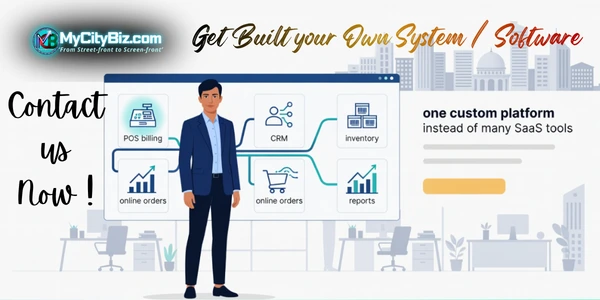
At this point, its not that businesses lack software at all. They have plenty. The real struggle is how fragmented their setup becomes, everything scattered and not working together. Thats when a lot of them start looking into custom software to fix it. Or at least, I guess thats what makes sense, though it might be oversimplifying a bit. Here, MyCityBiz.com takes your inputs and builds the optimal Software/System so that everything is wired and impose no extra financial burden.जैसे-जैसे कारोबार का विस्तार होता है, व्यवसायों को जिन समस्याओं का सामना करना पड़ता है
जब कंपनियां बड़ी होने लगती हैं, तो यह स्पष्ट हो जाता है कि उनका सॉफ्टवेयर उन्हें उन तरीकों से पीछे धकेलने लगता है जिन्हें उन्होंने पहले महसूस नहीं किया था। वे बिलिंग, लीड हैंडलिंग, कस्टमर सपोर्ट और ऑपरेशंस जैसे कामों के लिए अलग-अलग SaaS ऐप्स का इस्तेमाल करने लगते हैं। कुछ समय बाद, ये सभी टूल्स आपस में तालमेल नहीं बिठा पाते और सिस्टम को सुचारू रूप से चलाने के लिए लोगों को बहुत सारा मैनुअल काम करना पड़ता है। या अगर उन्हें कोई 'ऑल-इन-वन' SaaS प्लेटफॉर्म मिल भी जाता है, तो उसमें कई ऐसे जटिल फीचर्स हो सकते हैं जिनका उनके काम से कोई लेना-देना नहीं होता, लेकिन फिर भी उन्हें उनके लिए भुगतान करना पड़ता है।
इससे बढ़ते व्यवसायों को कई तरह की परेशानियां होती हैं। जैसे, उन्हें इन सभी मासिक सब्सक्रिप्शन के लिए भुगतान करना पड़ता है, जो जल्दी ही खर्च बढ़ा देता है और बिना किसी खास फायदे के लागत को और भी बढ़ा देता है। कर्मचारी दिन भर अलग-अलग प्लेटफॉर्म्स के बीच स्विच करते हुए समय बर्बाद करते हैं, एक ही डेटा को बार-बार अलग-अलग जगहों पर दर्ज करते रहते हैं। कस्टमाइजेशन सीमित होता है, इसलिए वर्कफ़्लो अटक जाते हैं या परेशान करने वाले तरीकों से प्रतिबंधित हो जाते हैं। फिर मैनुअल रिपोर्टिंग में बहुत समय लगता है और सिस्टम को एकीकृत करना इतना मुश्किल होता है कि सब कुछ कोऑर्डिनेट करना असंभव सा लगता है। मुझे लगता है कि यही वह हिस्सा है जो सबसे ज्यादा ध्यान खींचता है, कि कैसे ये सब मिलकर समस्या खड़ी कर देता है।
उदाहरण के लिए, एक रेस्तरां को लें। उनके पास POS बिलिंग के लिए एक टूल हो सकता है, ऑनलाइन ऑर्डर के लिए दूसरा, टेबल प्रबंधन, इन्वेंट्री ट्रैकिंग और यहां तक कि ग्राहक लॉयल्टी प्रोग्राम के लिए अलग-अलग टूल। हर टूल अपने आप में ठीक काम करता है, लेकिन वे आपस में कुशलतापूर्वक जुड़े नहीं होते, जिससे कई चीजें छूट जाती हैं।
सेवा व्यवसाय भी इसी तरह की समस्याओं का सामना करते हैं। पूछताछ WhatsApp के माध्यम से आती है, बिल किसी अन्य ऐप में जाते हैं, संभावित ग्राहकों की जानकारी स्प्रेडशीट में दर्ज की जाती है, और फॉलो-अप मैन्युअल रूप से किए जाते हैं, शायद केवल नोट्स या ईमेल के माध्यम से। यह सब अव्यवस्थित लगता है, है ना?
इस समय, यह कहना गलत होगा कि व्यवसायों के पास सॉफ्टवेयर की कमी है। उनके पास पर्याप्त सॉफ्टवेयर है। असली समस्या यह है कि उनका सेटअप कितना बिखरा हुआ है, सब कुछ अलग-अलग है और आपस में काम नहीं करता। ऐसे में, उनमें से कई लोग इस समस्या को हल करने के लिए कस्टम सॉफ्टवेयर की तलाश शुरू कर देते हैं। या कम से कम, मुझे लगता है कि यही तर्कसंगत है, हालांकि यह थोड़ा सरलीकरण हो सकता है। MyCityBiz.com आपके सुझावों को ध्यान में रखते हुए, आपके लिए सबसे उपयुक्त सॉफ्टवेयर/सिस्टम तैयार करता है ताकि सब कुछ सुचारू रूप से चल सके और कोई अतिरिक्त वित्तीय बोझ न पड़े।వ్యాపార కార్యకలాపాలు విస్తరిస్తున్నప్పుడు సంస్థలు ఎదుర్కొనే సమస్యలు
కంపెనీలు పెద్దగా పెరగడం మొదలుపెట్టినప్పుడు, వారు ఇంతకుముందు గమనించని విధంగా వారి సాఫ్ట్వేర్ వారిని వెనక్కి లాగడం ప్రారంభిస్తుందని స్పష్టంగా తెలుస్తుంది. వారు బిల్లింగ్ కోసం ఒకదానిలో, లీడ్స్ నిర్వహణ కోసం మరొకదానిలో, కస్టమర్ సపోర్ట్ కోసం ఇంకొకచోట, మరియు ఆపరేషన్స్ కోసం పూర్తిగా వేరొకచోట వంటి విభిన్న SaaS యాప్లను ఎంచుకుంటారు. కొంతకాలం తర్వాత, ఈ టూల్స్ అన్నీ ఒకదానితో ఒకటి అనుసంధానం కావు, మరియు పనులన్నీ సజావుగా సాగడానికి సిబ్బంది చాలా మాన్యువల్ పనులు చేయాల్సి వస్తుంది. ఒకవేళ వారు 'ఆల్-ఇన్-వన్' SaaS ప్లాట్ఫామ్ను కనుగొన్నా కూడా, అందులో వారికి ఉపయోగపడని అనేక ఇతర సంక్లిష్టమైన ఫీచర్లు ఉండవచ్చు, కానీ వాటి కోసం వారు డబ్బు చెల్లించాల్సి ఉంటుంది.
ఇది ఎదుగుతున్న వ్యాపారాలకు అనేక తలనొప్పులకు దారితీస్తుంది. ఉదాహరణకు, వారు ఈ నెలవారీ సబ్స్క్రిప్షన్లన్నింటికీ డబ్బు చెల్లిస్తుంటారు, ఇది త్వరగా పెరిగిపోయి, పెద్దగా ప్రయోజనం లేకుండానే ఖర్చులను పెంచుతుంది. సిబ్బంది రోజంతా ప్లాట్ఫామ్ల మధ్య మారుతూ, ఒకే డేటాను వేర్వేరు చోట్ల పదే పదే నమోదు చేస్తూ సమయాన్ని వృధా చేస్తారు. కస్టమైజేషన్ పరిమితంగా ఉంటుంది, కాబట్టి వర్క్ఫ్లోలు చికాకు కలిగించే విధంగా నిలిచిపోతాయి లేదా పరిమితం చేయబడతాయి. ఆపై, అనంతమైన సమయం తీసుకునే మాన్యువల్ రిపోర్టింగ్ ఉంటుంది, మరియు సిస్టమ్లను ఇంటిగ్రేట్ చేయడం చాలా కష్టమైన పని కాబట్టి అన్నింటినీ సమన్వయం చేయడం అసాధ్యంగా అనిపిస్తుంది. ఇవన్నీ ఎలా పేరుకుపోతాయో అనే విషయమే ఇక్కడ ప్రధానంగా నిలుస్తుందని నేను అనుకుంటున్నాను.
ఉదాహరణకు, ఒక రెస్టారెంట్ను తీసుకోండి. వారి వద్ద POS బిల్లింగ్ కోసం ఒక టూల్, ఆన్లైన్లో వచ్చే ఆర్డర్ల కోసం మరొకటి, టేబుల్స్ నిర్వహణ, ఇన్వెంటరీ ట్రాకింగ్, ఇంకా కస్టమర్ లాయల్టీ ప్రోగ్రామ్ల కోసం కూడా వేరేవి ఉండవచ్చు. వాటిలో ప్రతి ఒక్కటీ విడివిడిగా బాగానే పనిచేస్తుంది, కానీ అవి సమర్థవంతంగా అనుసంధానం కావు, అందువల్ల పనులు మధ్యలోనే ఆగిపోతాయి.
సేవా వ్యాపారాలు కూడా ఇలాంటి సమస్యలనే ఎదుర్కొంటాయి. వాట్సాప్ ద్వారా విచారణలు వస్తాయి, ఇన్వాయిస్లు వేరే యాప్లోకి వెళ్తాయి, లీడ్స్ స్ప్రెడ్షీట్లలో పేరుకుపోతాయి, మరియు ఫాలో-అప్లు కేవలం నోట్స్ లేదా ఈమెయిల్స్ ద్వారా మాన్యువల్గా నిర్వహించబడతాయి. ఇది చాలా గందరగోళంగా అనిపిస్తుంది, కదూ?
ఈ దశలో, వ్యాపారాలకు సాఫ్ట్వేర్ కొరత ఉందని కాదు. వారి వద్ద పుష్కలంగా ఉంటుంది. అసలైన సమస్య ఏమిటంటే, వారి సెటప్ ఎంతగా విచ్ఛిన్నమైపోతుందనేది, అన్నీ చెల్లాచెదురుగా ఉండి ఒకదానితో ఒకటి కలిసి పనిచేయకపోవడం. అప్పుడే వారిలో చాలామంది దీనిని సరిచేయడానికి కస్టమ్ సాఫ్ట్వేర్ వైపు చూడటం ప్రారంభిస్తారు. లేదా కనీసం, నా ఉద్దేశంలో అదే సరైనది, అయినప్పటికీ ఇది కొంచెం అతి సరళీకరణ కావచ్చు. ఇక్కడ, MyCityBiz.com మీ సూచనలను తీసుకుని, ప్రతిదీ అనుసంధానించబడి, ఎటువంటి అదనపు ఆర్థిక భారాన్ని మోపకుండా ఉండేలా ఉత్తమమైన సాఫ్ట్వేర్/సిస్టమ్ను నిర్మిస్తుంది.